
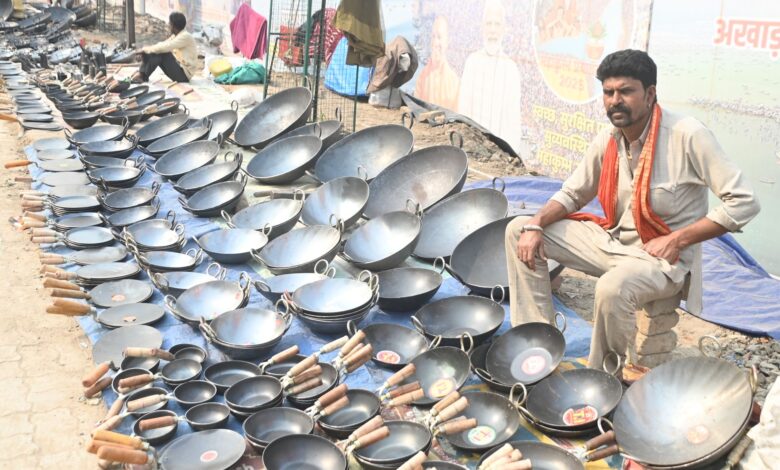
Choosing between cast iron, stainless steel, and hard-anodised kadhais isn’t about finding one single “best” metal, but matching three entirely different heating behaviors to your daily recipes. The right choice depends on whether your weekly rotation prioritizes the high-heat sear of a dry vegetable bhuna, the rapid temperature control of a mustard seed tadka, or low-maintenance convenience.
Materials engineering standards like [BIS QCO for stainless steel](https://alephindia.in/bis-qco-for-the-stainless-steel-cookware.php) confirm that each material’s core conductivity dictates its safe operating temperature and reactivity profile. The tension arises because cast iron excels at deep-frying yet reacts poorly to acidic tamarind curries, while stainless steel handles acids perfectly but requires more oil to prevent sticking during dry bhunas. Mapping each material against specific Indian cooking tasks stops the guessing and builds a kadai lineup that survives daily heat.
How thermal mass and conductivity shape Indian cooking techniques
Heat transfer in cookware is governed by two distinct physical properties: conductivity (how fast heat moves) and thermal mass (how much heat energy the material stores). Solid cast iron possesses high thermal mass but relatively low conductivity, meaning it heats slowly but holds a steady 180°C exceptionally well once saturated. This thermal inertia makes it ideal for deep-frying pooris, where adding cold dough would otherwise crash the oil temperature in a lighter vessel.
Tri-ply stainless steel operates on a fundamentally different principle, using an aluminium core sandwiched between steel layers to combine moderate thermal mass with high conductivity. This construction responds almost instantly to stove adjustments, allowing precise temperature drops when tempering delicate spices like cumin that burn in seconds. Hard-anodised aluminium occupies a middle ground: lightweight and fast-heating like raw aluminium, but with an electrochemically hardened surface that resists warping under high-heat Indian cooking better than uncoated alternatives.
Layered cross-section comparison showing how each material’s construction determines its heat movement pattern from burner to cooking surface.
Understanding these mechanisms explains why no single material dominates all Indian cooking tasks; each optimizes for a specific thermal behavior that either supports or undermines particular techniques.
Head-to-head performance across daily Indian tasks
Performance differences emerge most clearly when materials face identical Indian cooking challenges rather than generic heating tests. Material-principle analysis reveals predictable outcomes based on construction physics, even before accounting for individual brand variations or user technique. Buyers who understand these patterns can anticipate which kadai will succeed at specific tasks without relying solely on trial and error.
Tadka and tempering
Tadka demands rapid heat response and forgiveness against scorching, two properties that often conflict. Standard hard-anodised kadhais, with their thin bases and high conductivity, can burn garlic and dried red chillies in seconds if the flame isn’t managed precisely, because heat concentrates directly above the burner without lateral spreading. Cast iron provides a forgiving thermal buffer that blooms spices evenly, as its high mass absorbs excess energy and releases it gradually, preventing instant carbonization even if the flame runs slightly high.
Tri-ply stainless steel offers intermediate responsiveness, requiring active flame management but recovering faster than cast iron when adjusting between spice additions.
Bhuna and sauce reduction
Dry bhuna techniques expose the fundamental trade-off between food release and maintenance effort. Stainless steel requires proper pre-heating to achieve the Leidenfrost effect—where moisture creates a temporary vapor barrier—and adequate fat to prevent paneer or chicken from tearing during stirring. A well-maintained cast iron kadai’s polymerized patina offers superior natural release for high-starch reductions, but demands immediate deglazing or careful oiling to prevent sauce scorching in localized hot spots.
Hard-anodised surfaces provide initial non-stick convenience that degrades over time, making them suitable for low-fat sautéing early in ownership but less reliable for aggressive reduction work after months of use.
Deep-frying
Oil temperature stability during deep-frying separates materials more decisively than any other Indian cooking task. Adding room-temperature batter to hot oil causes an immediate temperature drop proportional to the vessel’s thermal mass; lightweight hard-anodised kadhais typically lose enough heat that oil falls below the 175°C threshold required for crisp results, leading to oily, heavy pakoras. Cast iron retains sufficient ambient heat to keep oil above this critical temperature throughout the frying cycle, producing consistently crisp textures without requiring constant flame adjustment.
Tri-ply stainless steel performs adequately for small batches but struggles with larger quantities where thermal recovery time extends significantly.
The hidden costs: maintenance, reactivity, and lifespan
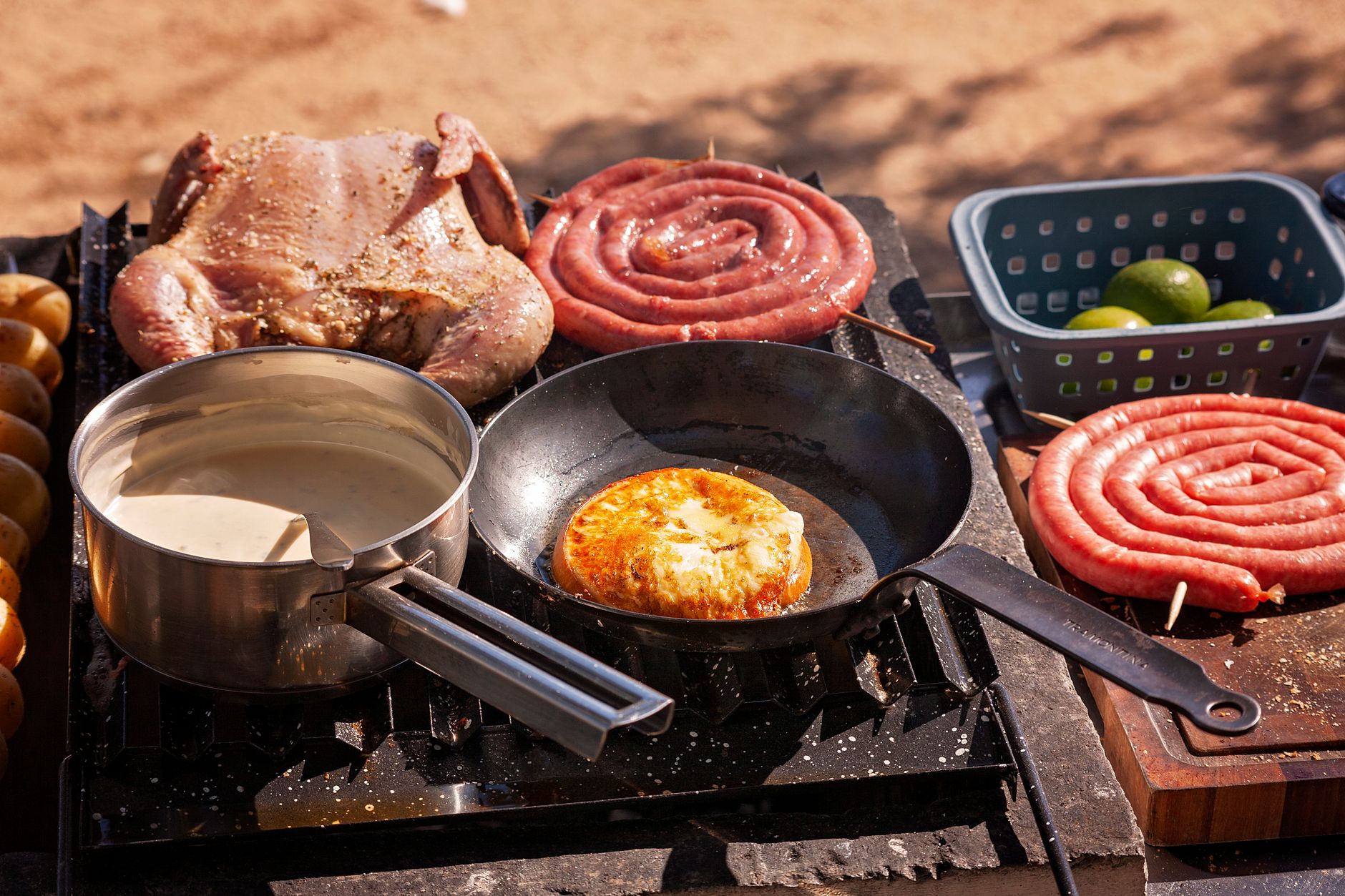
Long-term ownership costs extend far beyond purchase price, encompassing maintenance labor, reactivity limitations, and functional lifespan. Examining worn hard-anodised surfaces alongside well-seasoned cast iron patinas reveals divergent aging trajectories that reshape cost-per-use calculations over a five-year horizon. Wear patterns on hard-anodised pans typically show coating degradation concentrated at the base center within 18–24 months of regular Indian cooking, because repeated high-heat tempering exceeds the thermal tolerance of factory-applied PTFE layers.
Why “hard-anodised is naturally non-stick” breaks down after year one
Marketing claims about hard-anodised cookware often conflate the electrochemical anodisation layer with the chemical non-stick coating applied over it. While the anodised aluminium itself is relatively stick-resistant and PFAS-free, manufacturers almost always spray a PTFE coating over the body to market it as “non-stick,” and this factory-applied layer degrades rapidly under high-heat Indian tempering. BIS IS 1660 standards for aluminium cookware acknowledge the reality of [hard-anodised PTFE coatings](https://www.asaicookware.com/blogs/asai-science/pfas-in-india) and their limited thermal durability, distinguishing them from the underlying anodised substrate.
Heating these pans empty or using metal ladles accelerates coating failure irreversibly, potentially introducing chemical flakes into food once the PTFE layer compromises. Cast iron improves with use as polymerized oil layers build upon each other, creating a self-renewing surface that can be stripped and rebuilt indefinitely without losing structural integrity. Stainless steel tolerates steel wool scrubbing and abrasive cleaning forever, maintaining its cooking properties regardless of cosmetic scratches.
For acidic dishes like sambar or tamarind-based curries, cast iron’s reactivity becomes a genuine limitation; prolonged simmering strips seasoning and leaches iron, altering flavor profiles in ways that stainless steel avoids entirely. Readers concerned about this chemical threshold should consult the guide on [cooking acidic Indian dishes in cast iron](https://kitchengeek.in/can-you-cook-acidic-indian-dishes-in-cast-iron-cookware/) for detailed safety boundaries. Estimated lifespans vary dramatically: cast iron lasts generations with basic care, tri-ply stainless steel typically serves 10+ years, while hard-anodised pans with PTFE coatings often require replacement within 2–3 years of daily Indian cooking.
Cost-per-use calculations built on these estimates reveal that premium cast iron or stainless steel frequently undercuts budget hard-anodised options over a five-year horizon, despite higher upfront prices.
Cookware material comparison matrix
Use this decision matrix to match materials to your specific cooking patterns rather than seeking a universal solution. Estimated figures carry conditional framing based on typical usage patterns and should be adjusted for individual cooking frequency and maintenance habits.
| Material | Best suited for | Estimated lifespan | Maintenance effort | Genuine drawback |
|---|---|---|---|---|
| Cast iron | Deep-frying, roti, dry bhuna | Generational | Moderate (seasoning upkeep, no soap soaking) | Reacts with acidic foods; heavy weight |
| Tri-ply stainless steel | Acidic curries, tadka, wet gravies | Approximately 10+ years | Low (dishwasher-safe, abrasive cleaning OK) | Requires more oil for dry sautéing; higher upfront cost |
| Hard-anodised (PTFE-coated) | Low-fat sautéing, quick reheating | Typically 2–3 years | Very low initially, increases as coating fails | Cannot withstand high-heat tadka; coating degradation irreversible |
The table reveals that no material wins universally; each carries a genuine functional limitation that matters depending on your recipe rotation. Hard-anodised cookware serves a legitimate niche for low-heat, low-fat cooking where its initial convenience outweighs its limited lifespan, but buyers expecting it to handle daily tadka or deep-frying will face premature replacement costs. Tri-ply stainless steel commands a premium price but eliminates reactivity concerns entirely, making it the only safe choice for households that cook acidic dishes frequently.
Cast iron demands the most learning curve but rewards patience with unmatched heat retention for frying tasks and a surface that improves rather than degrades over decades. Building a mixed-material kitchen—assigning cast iron to heavy searing and frying, stainless steel to wet curries and acidic ingredients, and reserving hard-anodised strictly for gentle tasks—optimizes both performance and long-term value better than forcing one material to handle every technique.
The practical verdict
Each material excels at specific Indian cooking tasks based on its thermal properties, not marketing claims. Match your primary cooking techniques to the appropriate metal: cast iron for frying and searing, stainless steel for acidic curries, hard-anodised only for low-heat work. Ignoring these distinctions leads to ruined dishes, premature cookware failure, and unnecessary replacement costs that compound over years of daily cooking.
Frequently Asked Questions
Does hard-anodised aluminium leach into food if the coating scratches?
Once PTFE or anodised layers are compromised, underlying aluminium can react with acidic or alkaline foods per BIS IS 1660 guidelines. Scratched pans should be retired from cooking acidic dishes to prevent metallic taste and potential aluminium migration into food.
Which material is safest for daily sambar and tamarind-based curries?
Tri-ply stainless steel is the only safe choice for long-simmered acidic dishes because it remains entirely non-reactive. Tamarind and tomatoes strip cast iron seasoning, causing metallic flavors and iron over-leaching that stainless steel prevents completely.
Can I use a tri-ply stainless steel kadai for deep-frying pooris?
Physically possible but thermally suboptimal, as stainless steel loses heat rapidly when cold dough enters hot oil. Pooris absorb excess grease instead of puffing crisply, making cast iron vastly superior for maintaining the 180°C threshold this technique requires.
